When most people think of taxis, they imagine cars navigating busy streets and city traffic. However, in many parts of the world, taxis operate on water instead of roads.
Water taxis provide an efficient and often scenic form of transportation in cities built around rivers, canals, lakes, and coastal areas. For both residents and tourists, these services can offer a practical alternative to road transport while providing unique views of some of the world's most famous destinations.
So where exactly do water taxis operate, and why are they so popular?
What is a water taxi?
A water taxi is a passenger boat that operates similarly to a traditional taxi service.
Depending on the location, water taxis may:
- Follow fixed routes
- Operate on demand
- Provide private transfers
- Connect islands and coastal communities
- Transport passengers between tourist attractions
In some destinations, water taxis are an essential part of daily transportation, while in others they are primarily used by visitors seeking a memorable travel experience.
Venice, Italy: One of the world's most famous water taxi networks
Perhaps the most iconic water taxi destination is Venice.
Because Venice was built on a network of canals rather than roads, traditional vehicles are largely absent from the historic city center.
Instead, residents and visitors rely on:
- Water buses
- Private boats
- Gondolas
- Water taxis
Water taxis provide direct transportation between hotels, airports, train stations, and various points throughout the city.
For many travelers, arriving at a hotel by water taxi is one of the highlights of visiting Venice.
Amsterdam, Netherlands
The canals of Amsterdam are among the city's most recognizable features.
While bicycles remain the dominant form of local transportation, water taxis also operate throughout the canal system.
Passengers use water taxis for:
- Business travel
- Hotel transfers
- Sightseeing
- Private transportation
Water routes often provide a faster and more relaxing alternative to navigating busy city streets.
Bangkok, Thailand
Traffic congestion in Bangkok has encouraged the development of various water-based transportation options.
Along the Chao Phraya River and several canal networks, boats and water taxi services help commuters and tourists move efficiently through the city.
Many visitors are surprised to discover that traveling by water can sometimes be quicker than traveling by road during peak traffic periods.
Sydney, Australia
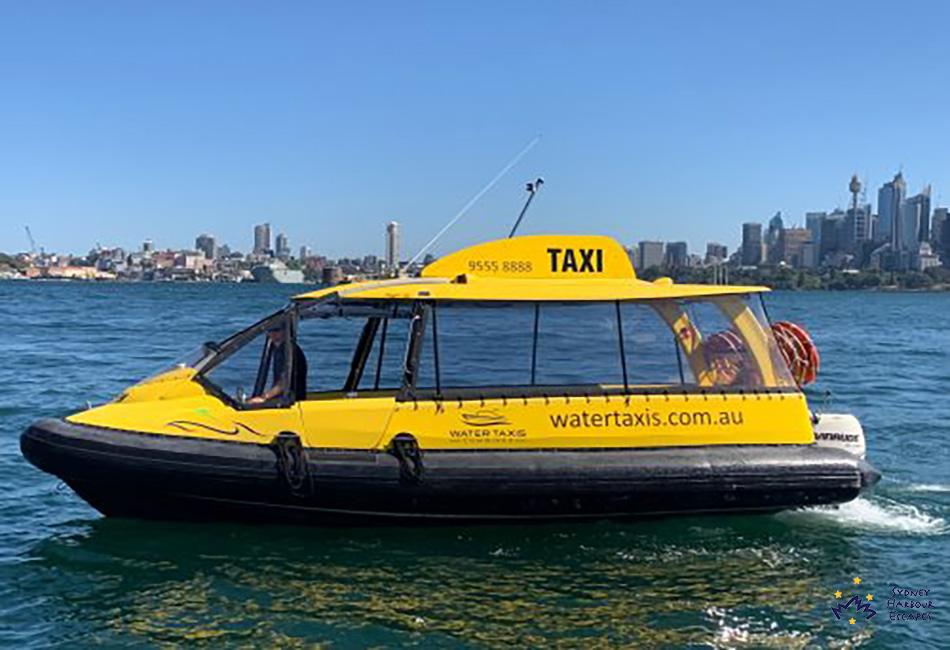
The famous harbor of Sydney supports numerous ferry and water taxi services.
Water taxis are commonly used for:
- Airport-area transfers
- Harbor crossings
- Event transportation
- Sightseeing trips
Because Sydney's coastline contains numerous bays and waterfront communities, water transport remains an important part of the city's mobility network.
New York City, United States
Although best known for its yellow taxis, New York City also offers various water transportation options.
Water taxi services have historically operated around:
- Manhattan
- Brooklyn
- Queens waterfronts
- Major tourist attractions
Passengers often use these services to avoid traffic while enjoying unique views of the city skyline.
Dubai, United Arab Emirates
In Dubai, water taxis provide an alternative way to travel along sections of the city's coastline and waterways.
Traditional abras, modern water taxis, and marine transport services help connect different parts of the city while offering a distinctive travel experience.
Water transportation also complements Dubai's growing tourism sector.
Istanbul, Turkey
Situated between Europe and Asia, Istanbul naturally relies on maritime transportation.
The Bosphorus Strait supports numerous passenger boat services that connect different districts throughout the city.
For many residents, traveling by water is simply part of everyday life.
Visitors often discover that water transport offers some of the most spectacular views available in Istanbul.
The Maldives: Water taxis as essential transportation
In the Maldives, water taxis are not just convenient—they are often necessary.
Because the country consists of hundreds of islands spread across the Indian Ocean, boats play a critical role in connecting:
- Resorts
- Airports
- Local communities
- Tourist destinations
Many travelers arriving in the Maldives begin their journey with a boat transfer immediately after landing.
Why travelers enjoy water taxis
Water taxis offer several advantages compared to traditional road transport:
Scenic views
Passengers can enjoy unique perspectives of:
- City skylines
- Historic districts
- Waterfront landmarks
- Coastal scenery
Reduced road congestion
In busy urban areas, water transport can sometimes bypass traffic entirely.
Memorable travel experiences
For many tourists, water taxis become part of the destination experience rather than simply a method of transportation.
Direct connections
Many water taxis offer direct routes between locations that would otherwise require longer road journeys.
How Taxiyo helps travelers continue their journey
While water taxis are available in many destinations, travelers often still need reliable transportation before or after their boat transfer.
This is where services such as Taxiyo can help.
Many travelers use Taxiyo to arrange:
- Airport transfers
- Hotel transportation
- Cruise terminal pickups
- Intercity journeys
- Private transfers to waterfront departure points
By organizing ground transportation in advance, passengers can create a smoother connection between airports, hotels, ferry terminals, and water taxi services.
This is particularly useful when visiting destinations such as Venice, Dubai, the Maldives, or other locations where multiple transportation modes are often required.
Final thoughts
Water taxis are one of the most unique forms of transportation found around the world.
From the canals of Venice and Amsterdam to the rivers of Bangkok and the islands of the Maldives, these services provide practical transportation while offering unforgettable travel experiences.
As global tourism continues to grow, water taxis remain an important part of urban mobility and destination exploration. Combined with reliable ground transportation solutions such as Taxiyo, travelers can enjoy seamless journeys across both land and water.